Knowledge Graph Linking Strategy
Executive Summary
This document outlines a comprehensive strategy for building and maintaining an effective knowledge graph within your Obsidian vault. It combines research-backed best practices with practical implementation approaches to create a densely connected, meaningful network of ideas that enhances knowledge discovery, retention, and creative thinking.
Table of Contents
- Linking Philosophy and Principles
- Connection Patterns
- Link Types and Usage Guidelines
- Optimal Link Density
- Note Creation Standards
- Maintenance Workflows
- Tools and Plugins
- Visual Mapping Techniques
- Success Metrics
- Implementation Roadmap
Linking Philosophy and Principles
Core Philosophy
"Linking notes together forces us to comb through our mental model of the world. We leverage our externalized graph to help us find connections between ideas."
The fundamental principle of knowledge graph construction is that connection creates value. Each new note adds value not just through its content, but through its relationships with existing information. Our goal is to create a "strongly connected dense graph" that mirrors how human memory works—through associations and multiple retrieval cues.
Guiding Principles
- Quality Over Quantity: Strategic linking that enriches your knowledge base rather than cluttered connections
- Atomic Notes: Each note should contain a single idea that makes one point
- Meaningful Relationships: Every link should represent a genuine conceptual connection
- Regular Maintenance: Daily or regular tending to strengthen connections
- Emergent Structure: Allow patterns to emerge naturally rather than forcing rigid hierarchies
Connection Patterns
Primary Pattern: Tags > Links > Hierarchy
A flat structure with dense connections provides better navigation than deep hierarchies. This approach prioritizes:
- Associative Connections: Direct links between related concepts
- Thematic Groupings: Tags for broad categorization
- Hub Notes: Maps of Content (MOCs) as entry points to topic clusters
- Sequential Links: Connection chains for narrative or procedural knowledge
Types of Connection Patterns
1. Hierarchical Connections
- Parent-child relationships
- General-to-specific concept mapping
- Use sparingly to avoid rigid structures
2. Associative Connections
- Peer-to-peer relationships
- Cross-domain linking
- Serendipitous discovery paths
3. Sequential Connections
- Process flows
- Temporal relationships
- Learning progressions
4. Cluster Connections
- Topic-based groupings
- Related concept networks
- Thematic neighborhoods
Link Types and Usage Guidelines
1. Contextual Backlinks
- Purpose: Main highways of your knowledge graph
- Usage: Embedded within note content with surrounding context
- Best Practice: Include 2-3 sentences around the link for context
2. Explicit Backlinks
- Purpose: Clear signposts for navigation
- Usage: Listed at note bottom under "Related Notes" or similar
- Best Practice: Group by relationship type (e.g., "Extends:", "Contrasts with:")
3. Implicit Backlinks
- Purpose: Discover unexpected connections
- Usage: Automatically generated by Obsidian
- Best Practice: Review regularly for new linking opportunities
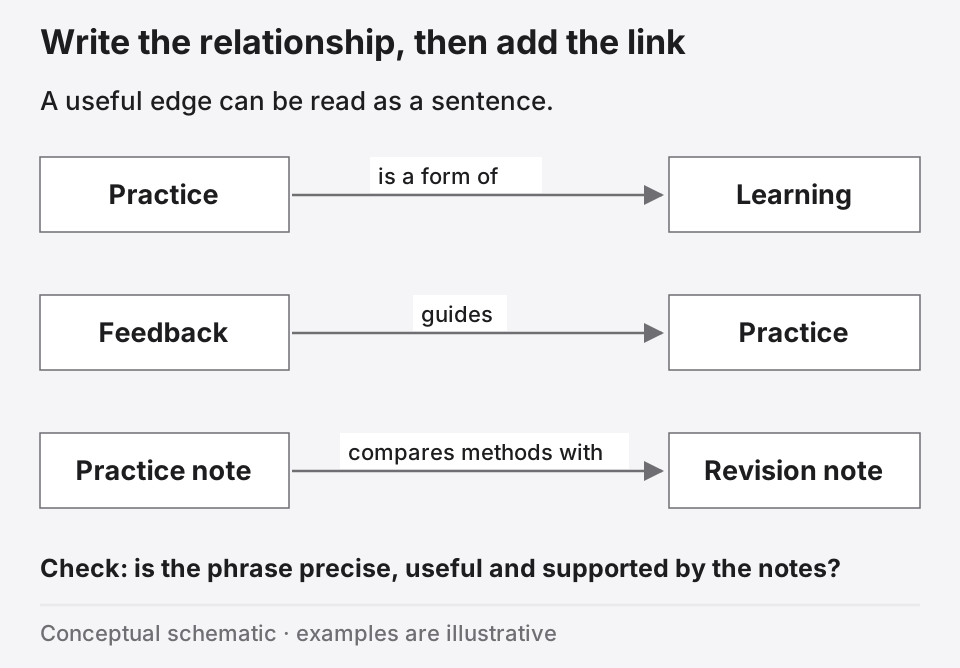
4. Typed Links (via plugins)
- Purpose: Semantic relationships between notes
- Usage: Specify relationship nature (e.g., "causes", "contradicts", "exemplifies")
- Best Practice: Develop consistent vocabulary for link types
Optimal Link Density
Target Metrics
Based on real-world PKM systems analysis:
- Average links per note: 6-10 links
- Minimum connections: 3 links per note (prevents isolation)
- Maximum useful density: 15-20 links per note (beyond this, diminishing returns)
Density Guidelines
- New Notes: Start with 3-5 connections minimum
- Mature Notes: Gradually build to 8-12 connections
- Hub Notes (MOCs): Can exceed 20 connections as navigation centers
- Daily Notes: 2-4 connections to maintain context
Connection Quality Indicators
- Each link should be bidirectional when possible
- Links should span multiple topic areas (cross-pollination)
- Avoid "link hoarding"—every connection should add value
Note Creation Standards
Atomic Note Principles
- Single Concept Rule: One idea per note
- Self-Contained: Each note should be understandable in isolation
- Evergreen: Write notes to be permanently valuable
- Clear Titles: Note titles are "the currency of links"
Title Conventions
- Use complete, declarative sentences when possible
- Make titles searchable and memorable
- Avoid ambiguous or generic titles
- Include key terms for better discovery
Note Structure Template
# [Clear, Imperative Title]

## Core Concept

[Single paragraph explaining the main idea]

## Context

[How this relates to broader knowledge]

## Connections

[Links to related concepts with brief explanations]

## References

[Sources and further reading]

## Related Notes

- - How it relates
- - How it relates
Maintenance Workflows
Daily Maintenance (5-10 minutes)
- Review Orphan Notes: Check graph view for isolated nodes
- Strengthen Recent Links: Add context to links created yesterday
- Update Hub Notes: Add new notes to relevant MOCs
- Quick Graph Scan: Look for potential new connections
Weekly Maintenance (30-45 minutes)
-
Graph Analysis:
- Identify clusters that could be better connected
- Find structural gaps between topic areas
- Review link density distribution
-
Link Quality Review:
- Check for broken links
- Upgrade implicit to explicit links where valuable
- Add typed relationships to important connections
-
Note Consolidation:
- Merge overly granular notes
- Split notes containing multiple concepts
- Update note titles for clarity
Monthly Maintenance (1-2 hours)
-
Comprehensive Graph Audit:
- Analyze overall graph structure
- Identify knowledge gaps
- Plan new areas for exploration
-
MOC Updates:
- Restructure hub notes
- Create new MOCs for emerging topics
- Archive obsolete navigation structures
-
Metrics Review:
- Calculate average link density
- Review engagement patterns
- Assess knowledge graph growth
Tools and Plugins
Essential Plugins
1. Graph Analysis
- Visualize link density and connectivity
- Identify isolated nodes and clusters
- Track graph evolution over time
2. Breadcrumbs
- Create typed links with semantic relationships
- Visualize hierarchical and non-hierarchical structures
- Generate alternative navigation paths
3. Dataview
- Query notes based on links and metadata
- Create dynamic MOCs
- Track linking patterns
4. Smart Connections
- AI-powered connection discovery
- Content-based similarity detection
- Automated linking suggestions
Advanced Tools
1. InfraNodus Plugin
- Network science insights
- Betweenness centrality analysis
- Structural gap detection
- AI-powered gap bridging
2. Excalibrain
- Visual mind mapping
- Typed link visualization
- Interactive graph exploration
3. Related Notes Finder
- Automatic similarity detection
- Real-time connection suggestions
- Offline operation for privacy
External Tools
- InfraNodus Web App: Advanced graph analysis and AI insights
- Neo4j: Professional graph database integration
Visual Mapping Techniques
Primary Visualization Methods
1. Node-Link Diagrams
- Standard Obsidian graph view
- Best for understanding overall structure
- Use filters to focus on specific areas
2. Mind Maps
- Hierarchical visualization
- Good for planning and brainstorming
- Tools: Excalidraw, Excalibrain
3. Concept Maps
- Show relationships between concepts
- Include relationship labels
- Better for complex idea networks
Visualization Best Practices
-
Use Color Coding:
- By note type or topic
- By creation date (fade older notes)
- By link strength or frequency
-
Apply Filters:
- Focus on local graphs for navigation
- Use tags to highlight topic areas
- Hide utility notes (daily notes, etc.)
-
Interactive Exploration:
- Start with high-level view
- Zoom into areas of interest
- Use local graph (depth 2-3) for context
Visual PKM Strategies
- Sketchnoting: Combine text with visual elements
- Diagramming: Create flowcharts for processes
- Spatial Layouts: Arrange related notes visually
Success Metrics
Quantitative Metrics
1. Graph Structure Metrics
- Link Density: Average links per note (target: 6-10)
- Orphan Rate: Percentage of isolated notes (<5%)
- Cluster Coefficient: How well-connected topic areas are
- Graph Diameter: Maximum distance between any two notes
2. Usage Metrics
- Daily Active Notes: Notes accessed per day
- Link Traversal Rate: How often links are followed
- New Connection Rate: Links added per week
- Note Creation Velocity: New notes per week
3. Knowledge Metrics
- Idea Generation Rate: New insights per week
- Cross-Domain Connections: Links between different topics
- Knowledge Retrieval Speed: Time to find information
- Completion Rate: Finished projects using PKM
Qualitative Metrics
1. Knowledge Quality
- Clarity of Understanding: Self-assessed comprehension
- Connection Insights: "Aha!" moments from links
- Creative Output: New ideas from graph exploration
- Learning Efficiency: Speed of acquiring new knowledge
2. System Usability
- Navigation Ease: How quickly you find information
- Maintenance Burden: Time spent on upkeep
- Tool Satisfaction: Comfort with workflow
- Cognitive Load: Mental effort required
Health Indicators
1. Green Flags (Healthy Graph)
- Regular organic growth
- Natural cluster formation
- High interconnectivity
- Active daily use
- Quick information retrieval
2. Yellow Flags (Needs Attention)
- Increasing orphan notes
- Declining link creation
- Over-reliance on search
- Irregular maintenance
- Slowing note creation
3. Red Flags (Intervention Required)
- Large isolated clusters
- Abandoned areas
- Broken link accumulation
- System avoidance
- Information silos
Implementation Roadmap
Phase 1: Foundation (Weeks 1-2)
-
Setup Core Structure:
- Install essential plugins
- Create note templates
- Establish naming conventions
- Set up basic MOCs
-
Initial Linking:
- Connect existing notes (minimum 3 links each)
- Create topic hub notes
- Establish daily note practice
- Begin regular maintenance routine
Phase 2: Growth (Weeks 3-8)
-
Expand Connections:
- Increase average link density to 5-6
- Create cross-domain links
- Develop typed link vocabulary
- Build out MOC structure
-
Refine Practices:
- Optimize note templates
- Establish review rhythms
- Experiment with visualization
- Track initial metrics
Phase 3: Optimization (Weeks 9-12)
-
Advanced Features:
- Implement AI-powered tools
- Create automated workflows
- Develop custom queries
- Build specialized visualizations
-
System Maturation:
- Achieve target link density (8-10)
- Establish knowledge domains
- Create learning paths
- Document best practices
Phase 4: Mastery (Ongoing)
-
Continuous Improvement:
- Regular metric reviews
- Workflow optimization
- Tool evaluation
- Practice sharing
-
Knowledge Synthesis:
- Cross-pollinate domains
- Generate new insights
- Create original content
- Build on connections
Conclusion
A well-maintained knowledge graph transforms information into understanding and isolated facts into interconnected wisdom. By following this strategy, you create not just a collection of notes, but a living, breathing extension of your mind that grows more valuable with each connection made.
Remember: The goal is not perfection but progress. Start small, be consistent, and let your graph evolve naturally while guiding it with these principles. Your future self will thank you for the rich web of knowledge you're building today.
Last Updated: [Current Date] Version: 1.0
Technical Implementation
- build_knowledge_graph.py - Python script for building the knowledge graph
- query_knowledge_graph.py - Query and analyze the graph structure
- gap_analysis.py - Identify missing connections automatically
- Knowledge Graph Visual Maps - Visualization of the graph structure